The Dusk Walk: A Winter Frontage Check for Dark, Wet Evenings
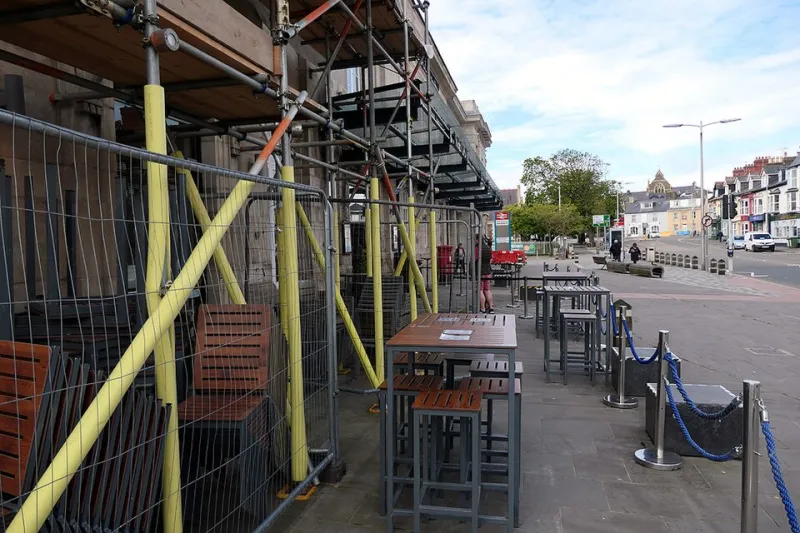
Photo: John Lucas , CC BY-SA 2.0, via Wikimedia Commons
There is a particular kind of quiet that settles over a UK high street at ten past four in November. The sky has gone the colour of wet slate, the pavements are slick, and the only thing moving is a bus. And yet this is exactly the moment when a good chunk of your guests are deciding whether to come in.
They are not studying your menu. They are not reading your Instagram. They are walking past at speed, collar up, and making a half-second judgement: does that place look open, warm and worth the detour? In summer you get a dozen chances to make that impression. In winter you get one, in the dark, through a fogged-up window.
Which is why the most useful thing you can do for kerb appeal this side of Christmas is not a refurbishment. It is a walk.
Why the dark changes the brief
Daylight flatters almost everything. It hides a dull bulb, softens a scuffed door, and makes a tired bit of window vinyl look like character. Darkness does the opposite. It turns every smudge into a smear, every dead bulb into a statement, and every unlit doorway into a suggestion that you might be shut.
The other thing winter does is compress the decision. In July, a guest might stroll past twice before choosing. In January, they are cold and hungry and they will take the first place that looks like it wants them. Your frontage is doing the job your host would do if they could stand on the pavement. Most nights, nobody can.
So the fix is not a designer. It is a repeatable twenty minutes, run at dusk, by someone on shift who knows what right looks like.
The twenty-minute dusk walk
Run it once a week, ideally on a Thursday around 16:30 — late enough for the lights to be on, early enough to fix anything before the weekend. One person, a phone torch, and a notepad or the notes app. Walk out of the front door, cross the road, and turn around.
Here is what you are looking at.
1. Light, from the guest's side of the street
Stand where a passer-by would stand. Can you read the sign without squinting? Is the light warm or is it that grim blue-white that makes a building look like a dental surgery? Are there dark patches where a bulb has gone, or worse, a flicker that reads as 'closing down'?
Quick fixes: a box of spare bulbs behind the bar, a note of which fittings take which wattage, and a rule that nobody leaves a dead bulb for a weekend. If your exterior lighting is on a timer, check it against the actual sunset — a timer still set to October will leave you dark by five.
2. The glass
Condensation is the giveaway. A window that has fogged into opaque grey says 'full of people' to nobody; it says 'I cannot see in, so I will keep walking'. If your glass steams up every service, that is a ventilation or a heating question, not a cleaning one — but in the short term, a squeegee and a cloth at 17:00 makes a real difference.
Look for fingerprints at child height, for last year's snowflake decal still clinging at the corner, for a window display that has not been touched since the autumn menu. One independent in Leeds made a small ritual of it: the closing supervisor wipes the inside of the front glass as the last job of the afternoon, and the barback does the outside on the way past. Two minutes, twice a day, and the difference is genuinely visible from the bus stop.
3. Signage that works at walking pace
You have about three seconds. If the only thing readable from the pavement is your logo, you have wasted them. What a cold passer-by wants to know is: are you open, what are you, and is there a reason to come in tonight.
An A-board with tonight's special will out-perform a beautiful but static sign every time. So will a chalk line that names the fire, the soup or the guest beer. Just check it is actually legible from four metres in the wet, and that it is not leaning into a puddle.
4. The doorway
This is where most audits stop and most guests give up. Look at the door as a nervous first-timer would. Is the handle obvious? Is there a step you would trip on in the dark? Is the mat sodden, curled or missing? Is the light directly above the door working?
Small things matter more than they should here. A wet mat that squelches underfoot is the first thing a guest experiences. A door that sticks is the second. A bin bag visible beside the entrance is the third. None of these are expensive to fix and all of them are invisible to anyone who works inside the building.
5. The first three metres inside
Once the door opens, the audit continues. What does a guest see, smell and hear in the first three metres?
A hotel in Cornwall built its whole winter welcome around this: a lamp on a side table just inside the door, a scent that is not overpowering, and a member of staff who looks up within five seconds. It costs almost nothing and it is the single most mentioned thing in their winter reviews.
Check for: a draught that hits the ankles, a pile of deliveries in the entrance, a host desk that is empty, a sign that says 'please wait to be seated' with nobody to wait for. And check the smell — damp coats and old cooking fat are the two that guests notice and never mention to your face.
Logging it so it actually gets fixed
A walk is only worth doing if the findings travel. Keep it simple:
- One shared note per site — a WhatsApp group, a pinned note, a page in the duty manager book. Nothing that requires a login nobody remembers.
- Photo first, words second. A picture of the dead bulb is worth a paragraph.
- Tag the fix as either 'tonight', 'this week' or 'needs money'. Most items land in the first two buckets, which is the point.
- A Friday 15:00 cut-off. Anything logged after that is a Monday job.
- One name against each item. 'Someone should' is how things stay broken for a month.
Who owns it
Not the GM, not the owner, not the marketing person. The dusk walk belongs to whoever is on shift at half four — usually a supervisor or a senior bar person. Give them the authority to spend a tenner on bulbs and a new mat without asking, and the routine will stick. Take that authority away and it becomes another thing the manager does when they remember.
Rotate it, too. Two or three people trained on it means it survives holidays and sick days, and it gives your team a genuine stake in how the place looks from the street. In a tight labour market, that is not a small thing.
The point is not perfection. It is that on a wet Thursday in November, someone has stood where the guest stands, looked at what the guest looks at, and sorted the obvious things before the weekend crowd arrives. Twenty minutes. Once a week. It is the cheapest bit of hospitality you will do all winter.