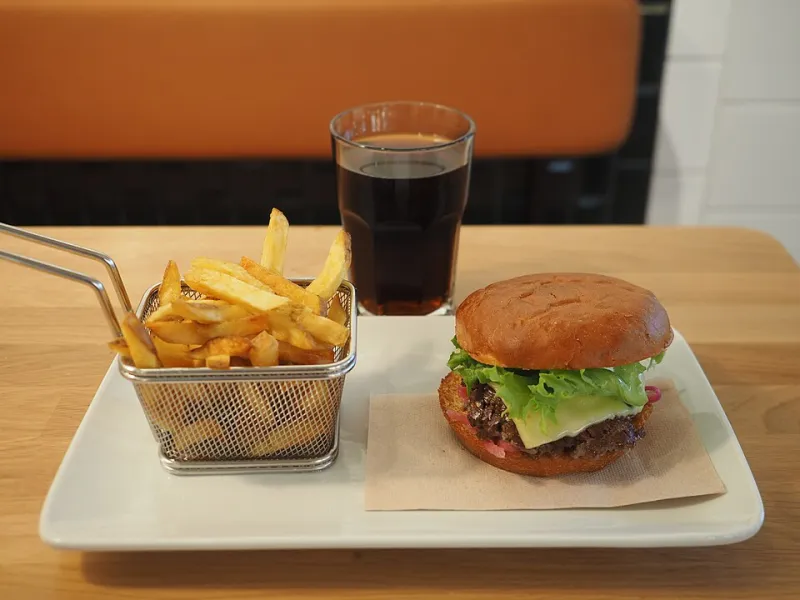
One Ingredient, Three Plates: Putting the Dead Shift to Work

Photo: Ted Eytan, CC BY-SA 2.0, via Wikimedia Commons
There is a shift in your building that nobody fights over. For a lot of pubs it's Tuesday lunch. For hotels it might be the 3pm-to-6pm stretch in the all-day bar, and for restaurants it's often the first sitting on a Wednesday. It rarely earns its keep on the P&L. But it is the cheapest research and development facility you already own.
The idea is simple enough: take the quietest service of the week, give the team one ingredient and three plates, taste them before the doors open, and decide within 48 hours whether any of it deserves a place on the next menu. No consultants, no extra shifts, no innovation away-day.
First, find your genuinely quiet service
Don't guess. Pull eight weeks of covers by day and by daypart from your EPOS and look for the trough. The key rule is that it has to be a service you're already trading — the whole point is that you're not adding hours or paying anyone extra to be there. If Tuesday lunch is dead but you're still staffing two chefs and one on the bar, that's your lab.
It also helps if the quiet shift is one where the kitchen has a little slack in prep. A trial that lands on top of a 40-cover lunch prep list will get dropped by week three. Be honest about capacity before you commit.
The format: one ingredient, three treatments
One ingredient a week. Not a theme, not a cuisine, not a 'concept'. A single ingredient — whatever your supplier is pushing, whatever is glutting, whatever is at its best for six weeks and then gone.
Then ask one chef de partie to build three plates around it:
- The safe one. Something the kitchen can already execute blind, using components that live on the current menu.
- The interesting one. A different technique or a different part of the ingredient — the trim, the skin, the stem.
- The stretch. The dish that might be too much for a Saturday night, included so the team can say so out loud.
Portion them as four-to-six-bite tasters, not full plates. You're looking for a reaction, not a meal. And give the owner of the trial a rough food cost per portion before the tasting, because 'would you pay £9 for this' is a very different question when everyone in the room knows the ingredients cost 74p.
The 20-minute tasting that doesn't eat the shift
Fold it into the briefing you're already holding. Chefs taste standing up; nobody needs a tablecloth. The rules that make it work:
- No names on the plates. Label them A, B and C. If the chef explains the dish first, the team will tell you what they think of the chef, not the food.
- Everyone tastes. Kitchen, bar, housekeeping if it's a hotel, the Saturday night glass collector if they're in. Front of house hears the question guests actually ask.
- Four questions, on paper. Would you order it? Does it belong in this building? Could we cook it at 8pm on a Saturday? What would you change? Mark out of five, one line of comment.
- Explain afterwards. Then let the author defend it. That conversation is where most of the value sits.
Twenty minutes, start to finish, done before the first table is seated.
Capture the feedback honestly, then act on it
There is a difference between a team that likes a dish and a team that will sell a dish. Watch for the plates that come back with two bites taken and a lot of nodding. The scores are useful; the one-line comments are more useful; the silence is the most useful of all.
Two things tend to fall out of the first month. The first is that your front-of-house team are far better at spotting a dish that will be a nightmare to describe at a busy table than any menu meeting. The second is that the 'stretch' dish is almost never the one that wins — which is fine, because you only needed to know.
Keep one notebook or one shared spreadsheet. Ingredient, date, the three dishes, average scores, the decision. After three months you'll have a record of what your own team gets excited about, which is worth more than another trend report.
Then let the guests vote
The tasting only decides what's worth testing properly. The commercial test happens on the specials board: two weeks, at a price that reflects your real GP target, tracked by mix and margin rather than by whether the chef liked the photo.
A useful benchmark is to decide in advance what 'a win' means — say, 8% of covers across the fortnight and a GP in line with your mid-range mains. If it misses both, it goes. No slow fade, no quiet retention out of politeness. Team suggestions that get killed cleanly get replaced by better ones; suggestions that linger unexplained stop people bothering.
Keep it alive
Five rules keep this from becoming another initiative that dies in February:
- One ingredient a week, never more
- Never during peak, never on a day you can't spare 20 minutes
- Always a decision, always communicated back to the person who made the dish
- Rotate who leads — a commis with a good idea should get the same slot as the sous chef
- Write it down, every time
You are not looking for a signature dish every week. You're looking for six decent menu ideas a quarter, a team that feels listened to, and a reason for a Tuesday lunch to matter to the people working it. The last of those is worth more than the first.