Borrowed Trade: A January Staff Night Where Everyone Teaches One Small Thing
January has a way of making a pub feel both empty and expensive. The beer garden is asleep, the bookings are thin, and the training budget has already been spent on Christmas temps and broken glassware. So the idea of another formal training session lands about as well as a warm pint.
But there is a cheaper, brighter option: a 90-minute staff night where the team teaches each other. Not a course. Not a compliance module. Just a handful of small, useful skills swapped between front-of-house and kitchen, with tea, biscuits and no slide deck.
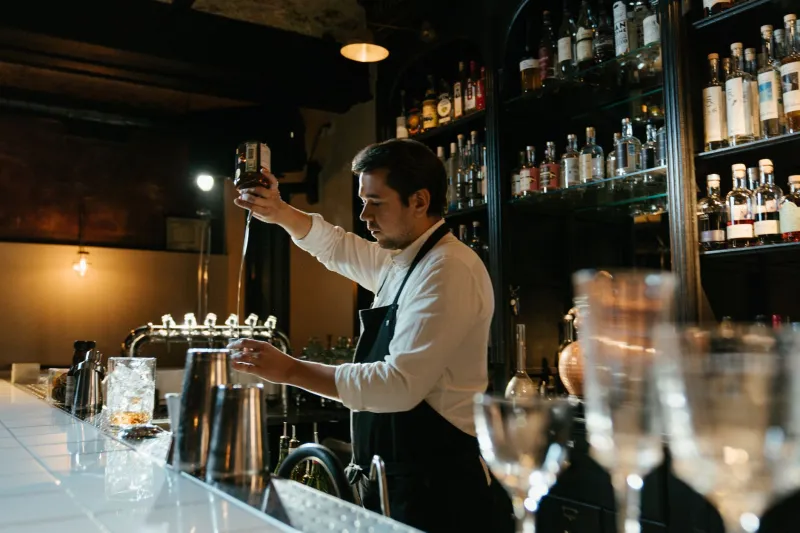
Call it a borrowed trade night. The bar shows the kitchen how to pull a clean pint. The kitchen shows the bar how to spot an undercooked dish before it leaves the pass. Someone from housekeeping demonstrates a six-minute room reset. A waiter explains the exact sentence that stops a complaint becoming a scene. Everyone leaves with one thing they can use on their next shift.
Start with one useful thing, not a curriculum
The temptation is to build a programme. Resist it. A programme needs aims, outcomes and a folder nobody opens. A skill exchange needs only a sign-up sheet and a rule: teach one thing you can demonstrate in ten minutes.
Put the sheet in the staff room three weeks before. Three columns: I can show, I want to learn, maybe. Add examples so people do not freeze: pouring a pint with the right head, carrying three plates without apology, writing an allergen note that a chef can actually read, resetting a table for a second sitting, handling a complaint without saying “I’ll get the manager” as a reflex.
Keep it voluntary. That is the whole point. If people feel volunteered, it becomes another meeting. Ask managers to recommend, not nominate. Make clear that the head chef can teach one session and sit in on another. The best version has no hierarchy: the newest bar back might know more about coffee than the general manager.
If the night is on top of a normal rota, pay the hours or offer time back. If it replaces a quiet Tuesday pre-service slot, even better. The cost should be tea, coffee, biscuits and maybe a few pizzas. That is genuinely less than a round for a team of eight.
The ninety-minute shape
Keep the room simple. Use the bar, the pass, the cellar, a bedroom if you are a hotel. Small groups of four to six. No projector.
- 0–10 minutes: tea and a name round. Everyone writes one thing they could show on a sticky note. No pressure to present it yet.
- 10–30 minutes: two demos run in parallel. One front-of-house, one kitchen. People choose. Each teacher gets eight minutes to demonstrate, four minutes for questions.
- 30–50 minutes: swap. If the bar taught pint-pulling, the kitchen teaches knife care or how to read a ticket under pressure.
- 50–70 minutes: a third round, ideally something that crosses departments: complaint handover, table reset, allergen communication, closing checks.
- 70–85 minutes: everyone writes one thing they will try on their next shift on a card. Stick them on the staff room wall.
- 85–90 minutes: thank-yous. Name the teachers. No certificates.
One rule matters more than the agenda: show, don’t tell. A ten-minute demo beats a twenty-minute explanation. If someone starts building a PowerPoint, gently take the laptop away.
Keep it low-cost, not low-effort
The night should feel like a break from service, not a test. Put food out. Let people arrive late if the school run runs late. Do not film it for social media unless everyone has agreed. Do not turn it into a performance review.
The low-cost part is easy: no external trainer, no venue hire, no printed workbooks. The effort is in the invitation. Ask two or three people personally to teach. Choose skills that are genuinely useful, not vaguely inspirational. “How to read a table” is good. “Building a service culture” is not.
A useful test: would a new starter use this on their first solo shift? If yes, it belongs. If no, it is a workshop, not a trade.
Turn the night into something that sticks
A one-off night is nice. A night that changes the pre-shift brief is better. At the end, managers should leave with three repeatable standards to test for a fortnight: a complaint handover phrase, a cellar check, a way of clearing a table without interrupting. Put one on the daily brief each week. Ask the person who taught it to lead the check.
Follow up after two weeks. Not with a survey. With a question in the staff room or a one-to-one: did you use it? What got in the way? If a skill does not survive a busy Friday, it was probably a nice idea rather than a useful one.
The retention gain is quieter. People stay where they feel useful and seen. A kitchen porter who teaches the bar team how to stack a glass rack properly is not just passing on a trick. They are being treated as someone with expertise. A waiter who learns how the kitchen handles a late ticket is less likely to shout at the pass. That is service quality with a human face.
January will still be quiet. The tills will still be cautious. But a borrowed trade night costs less than a round and leaves something behind: a team that knows a little more about each other’s work, and a few small skills that make the next shift smoother.